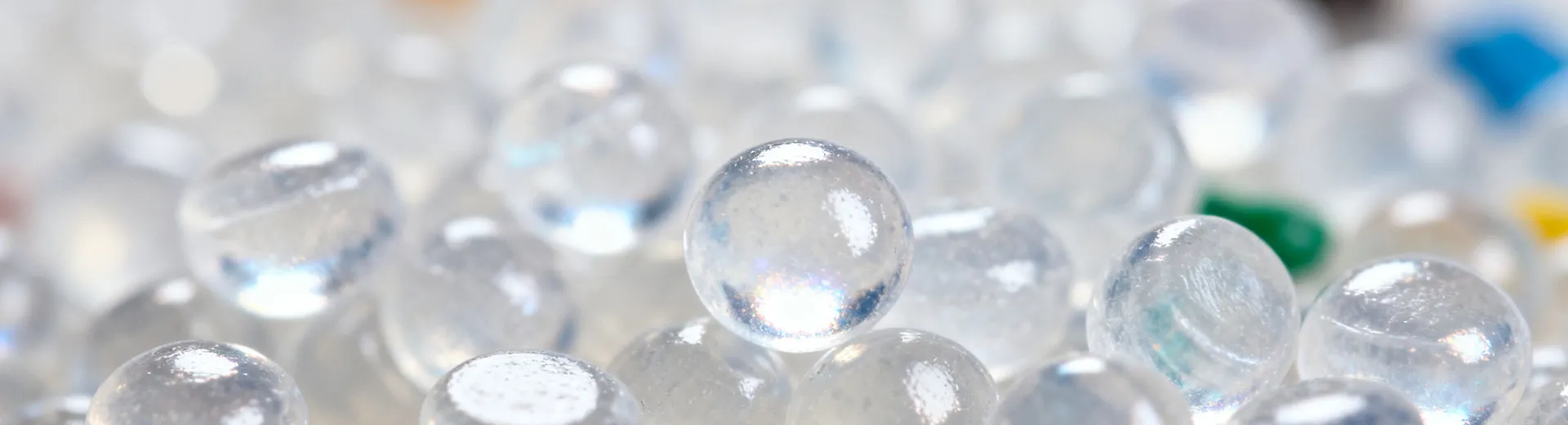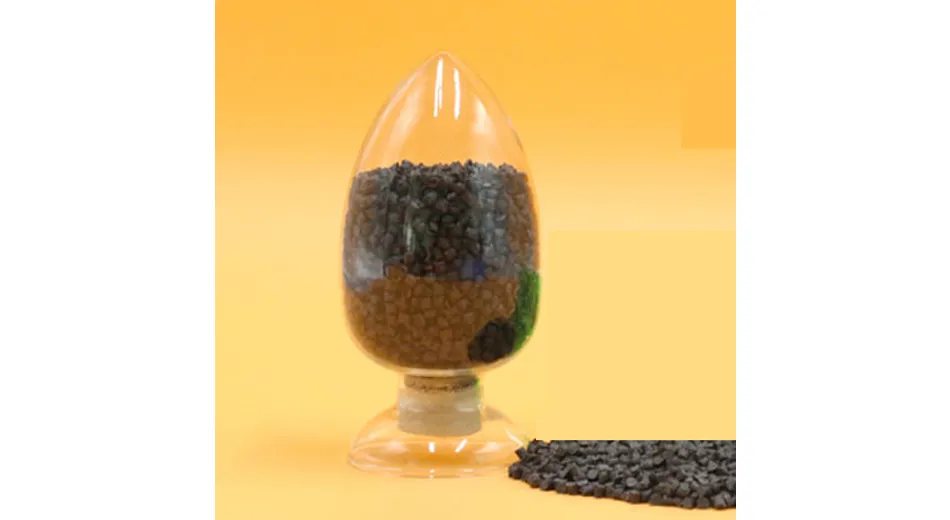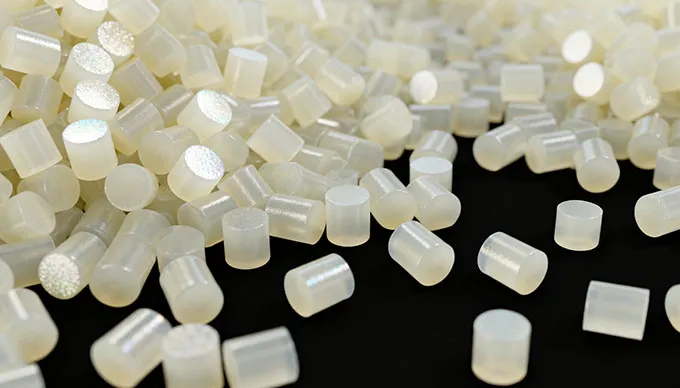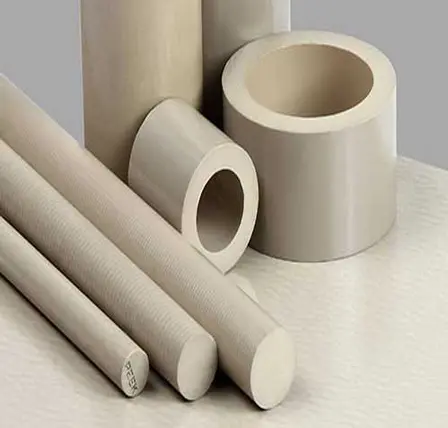
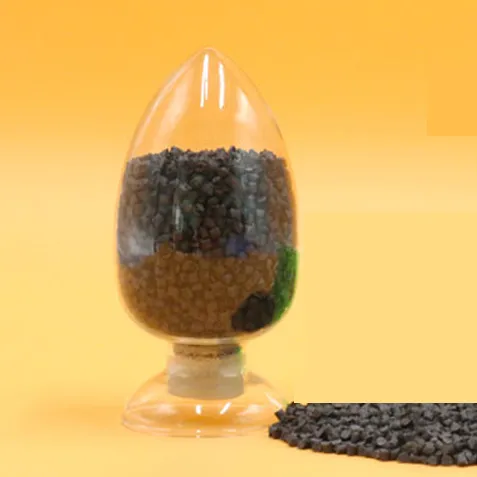
330CA30 is a semi-crystalline, 30% carbon-fiber-reinforced polyetheretherketone (PEEK) composite manufactured by leading Chinese producers like XINGZHONGRUN. It is processed into injection-moldable pellets, optimized for applications requiring a balance of mechanical strength, thermal stability, and wear resistance.
Mechanical Strength: The addition of 30% carbon fibers significantly enhances tensile and flexural strength compared to neat PEEK. It maintains structural integrity at elevated temperatures (up to 260°C continuous use) and resists creep under long-term load.
Thermal Stability: With a glass transition temperature (Tg) of approximately 143°C and melting point around 334°C, 330CA30 retains rigidity in high-temperature environments. Its low thermal expansion coefficient minimizes dimensional changes during heating/cooling.
Wear & Friction Performance: The carbon fibers reduce friction coefficient and wear rate by over 5 times compared to neat PEEK. This makes it ideal for dynamic applications (e.g., bearings, seals) where abrasive wear is a concern.
Chemical & Hydrolytic Resistance: It withstands aggressive chemicals (acids, alkalis, solvents) and steam, making it suitable for harsh industrial environments like oil & gas and chemical processing.
Additional Features: The composite is inherently flame-retardant (UL94V-0), electrically insulating, and food-contact compliant (FDA-certified), expanding its usability in consumer and medical sectors.
| Test Item | Test Standard | Test Conditions | Unit | Test Data |
| Mechanical Properties | ||||
| Tensile Strength | ISO 527 | Fracture, 23°C | MPa | 250 |
| Elongation at Break | ISO 527 | Fracture, 23°C | % | 1.5 |
| Flexural Strength | ISO 178 | Fracture, 23°C | MPa | 360 |
| Flexural Modulus | ISO 178 | 23°C | GPa | 21 |
| Compressive Strength | ISO 604 | 23°C | MPa | 300 |
| Impact Strength of Simply Supported Beam | ISO 179/1eA | Notched | kJ m-2 | 6 |
| ISO 179/1U | Unnotched | kJ m-2 | 40 | |
| Impact Strength of Cantilever Beam | ISO 180/A | Notched | kJ m-2 | 8 |
| ISO 180/U | Unnotched | kJ m-2 | 40 | |
| Forming Shrinkage Rate | ISO 294-4 | Parallel to flow direction | % | 0.1 |
| Perpendicular to flow direction | % | 0.5 | ||
| Thermal Performance | ||||
| Melting point | ISO 11357 | - | ℃ | 343 |
| Glass transition temperature | ISO 11357 | Initial | ℃ | 143 |
| Specific heat capacity | DSC | 23°C | kJ kg-1 ℃-1 | 1.8 |
| Thermal expansion coefficient | ISO 11359 | Below Tg along flow direction | ppm K-1 | 5 |
| Above Tg along flow direction | ppm K-1 | 6 | ||
| Heat deflection temperature | ISO 75-f | 1.8 Mpa | ℃ | 339 |
| Thermal conductivity | ISO 22007-4 | 23℃ | W m-1 K-1 | 0.95 |
| Liquidity | ||||
| Melt Index | ISO 1133 | 380℃, 5kg | g 10min-1 | 27 |
| Others | ||||
| Density | ISO 1183 | Crystalline | g cm-3 | 1.4 |
| Non-crystalline | g cm-3 | - | ||
| Shore D Hardness | ISO 868 | 23°C | 88 | |
| Water Absorption Rate (3.2mm Thick Tensile Rod) (Immersion Test) | ISO 62-1 | 24 hours, 23°C | % | 0.04 |
| Equilibrium, 23°C | % | 0.3 | ||
| Dielectric Strength | IEC 60243-1 | 2mm | kV mm-1 | - |
| Compared to Tracking Index | IEC 60112 | - | V | - |
| Dielectric Constant | IEC 60250 | 23℃, 1kHz | - | - |
| 23℃, 50Hz | - | - | ||
| Tangent of Loss | IEC 60250 | 23℃, 1MHz | - | - |
| Volume Resistivity | IEC 60093 | 23℃, 1V | Ω cm | 105 |
| 275℃ | Ω cm | - | ||
Aerospace: Used in aircraft components such as gas analyzer structures, heat exchanger fins, and balance devices, where lightweight and high-strength materials are critical to fuel efficiency and performance.
Automotive: Ideal for wear-resistant parts like sleeve bearings, sliding bearings, valve seats, and pump rings. It helps reduce vehicle weight, improving fuel economy and lowering emissions.
Medical: Suitable for surgical instruments, dental devices, and orthopedic fixation hardware (e.g., bone plates, screws). Its biocompatibility and resistance to sterilization processes (autoclaving) make it a viable alternative to metal implants.
Industrial: Common in sealing components (O-rings, gaskets), compressor valve plates, and piston rings for pumps and valves. It handles high pressures and corrosive fluids effectively.
Electronics: Used in connectors, insulators, and semiconductor wafer handling equipment. Its thermal stability and electrical insulation properties ensure reliability in high-temperature electronic systems.
The composite’s versatility, combined with its superior mechanical and thermal properties, makes it a preferred choice for industries seeking to replace metal components with lightweight, high-performance plastics.
Want to Get More Details About Plastic Raw Materials?
Email us
Call us
Address
Room 16B, Building C, Wanguo City, Pinglang Road, Pingji Avenue, Nanwan Sub-district, Longgang District, Shenzhen, Guangdong Province, China