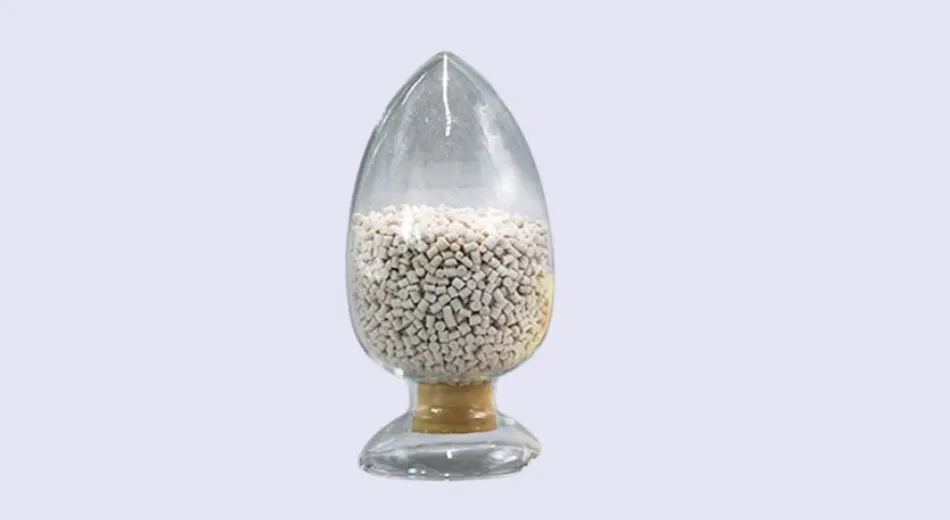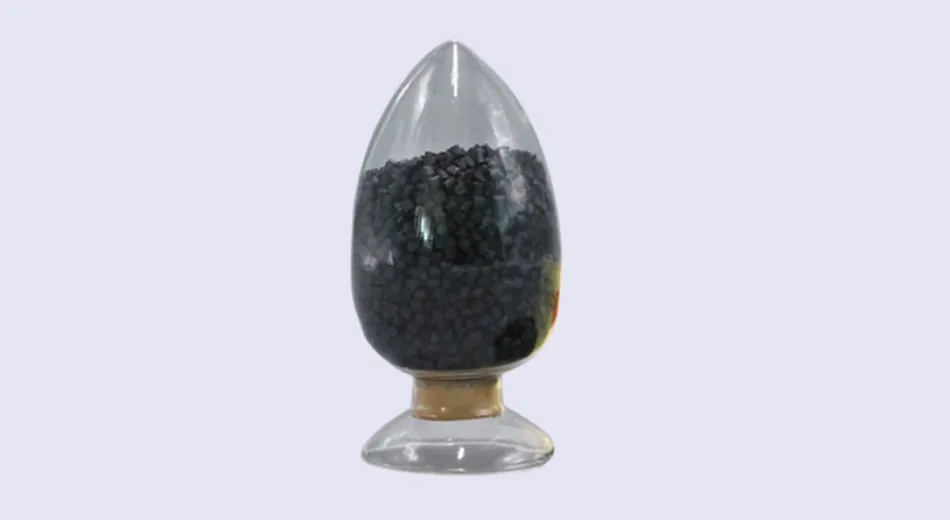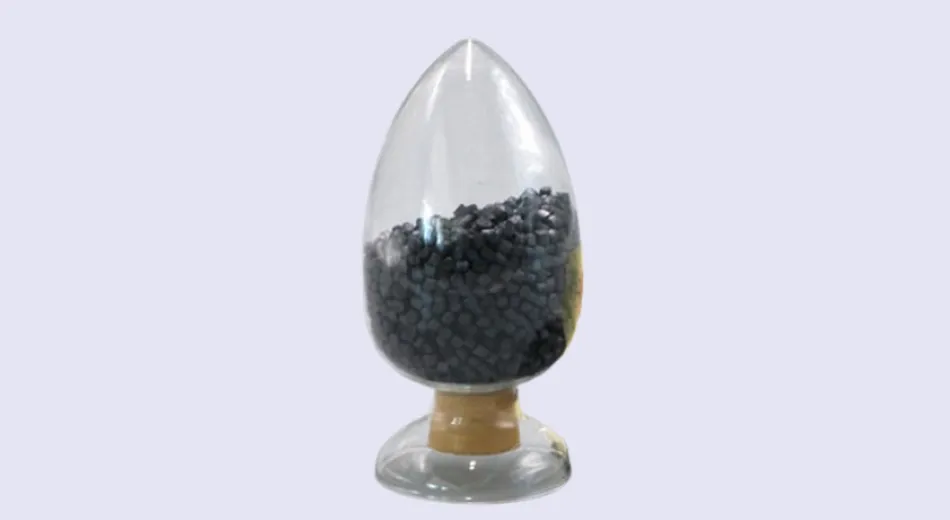
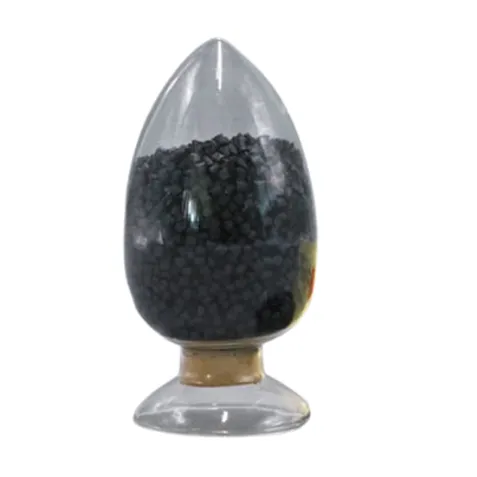
330FC30 is a specialized carbon fiber-reinforced polyetheretherketone (PEEK)grade engineered for applications requiring exceptional wear resistance, high strength, and thermal stability. It belongs to the "FC" series (Friction & Wear Resistant) of PEEK materials, which are tailored to withstand abrasive environments and heavy-duty use.
Reinforcement: The "30" in 330FC30 indicates a 30% carbon fiber filler, which significantly enhances mechanical properties. Carbon fibers improve tensile strength, stiffness, and creep resistance compared to unfilled or glass fiber-reinforced PEEK. Unlike glass fibers, carbon fibers also reduce wear on mating surfaces, making the material more suitable for sliding or rotating components.
Wear Resistance: As part of the FC series, 330FC30 exhibits superior abrasion resistance compared to standard PEEK grades. This makes it ideal for parts that experience constant friction, such as bearings, gears, and valve seats.
Thermal Stability: 330FC30 retains its structural integrity at high temperatures, with a continuous use temperature exceeding 250°C (similar to other PEEK variants). This allows it to perform in demanding environments like automotive engines, industrial machinery, and aerospace applications.
Mechanical Properties: The carbon fiber reinforcement boosts tensile strength (typically above 150 MPa) and flexural modulus (around 10 GPa), while maintaining a balanced combination of rigidity and toughness. This ensures the material can withstand heavy loads without cracking or deforming.
Additional Features: 330FC30 retains PEEK’s inherent chemical resistance (resistant to acids, alkalis, and organic solvents), electrical insulation, and low moisture absorption. Some variants may also offer flame retardancy (UL94V-0 rating) and biocompatibility, depending on the manufacturer.
| Test Item | Test Standard | Test Conditions | Unit | Test Data |
| Mechanical Properties | ||||
| Tensile Strength | ISO 527 | Fracture, 23°C | MPa | 150 |
| Elongation at Break | ISO 527 | Fracture, 23°C | % | 2 |
| Flexural Strength | ISO 178 | Fracture, 23°C | MPa | 220 |
| Flexural Modulus | ISO 178 | 23°C | GPa | 11.5 |
| Compressive Strength | ISO 604 | 23°C | MPa | 170 |
| Impact Strength of Simply Supported Beam | ISO 179/1eA | Notched | kJ m-2 | 4 |
| ISO 179/1U | Unnotched | kJ m-2 | 30 | |
| Impact Strength of Cantilever Beam | ISO 180/A | Notched | kJ m-2 | 5 |
| ISO 180/U | Unnotched | kJ m-2 | 30 | |
| Forming Shrinkage Rate | ISO 294-4 | Parallel to flow direction | % | 0.3 |
| Perpendicular to flow direction | % | 0.7 | ||
| Thermal Performance | ||||
| Melting point | ISO 11357 | - | ℃ | 343 |
| Glass transition temperature | ISO 11357 | Initial | ℃ | 143 |
| Specific heat capacity | DSC | 23°C | kJ kg-1 ℃-1 | 1.8 |
| Thermal expansion coefficient | ISO 11359 | Below Tg along flow direction | ppm K-1 | 12 |
| Above Tg along flow direction | ppm K-1 | 15 | ||
| Heat deflection temperature | ISO 75-f | 1.8 Mpa | ℃ | 315 |
| Thermal conductivity | ISO 22007-4 | 23℃ | W m-1 K-1 | 0.87 |
| Liquidity | ||||
| Melt Index | ISO 1133 | 380℃, 5kg | g 10min-1 | 14 |
| Others | ||||
| Density | ISO 1183 | Crystalline | g cm-3 | 1.45 |
| Non-crystalline | g cm-3 | - | ||
| Shore D Hardness | ISO 868 | 23°C | 83 | |
| Water Absorption Rate (3.2mm Thick Tensile Rod) (Immersion Test) | ISO 62-1 | 24 hours, 23°C | % | 0.04 |
| Equilibrium, 23°C | % | 0.3 | ||
| Dielectric Strength | IEC 60243-1 | 2mm | kV mm-1 | - |
| Compared to Tracking Index | IEC 60112 | - | V | - |
| Dielectric Constant | IEC 60250 | 23℃, 1kHz | - | - |
| 23℃,50Hz | - | - | ||
| Tangent of Loss | IEC 60250 | 23℃, 1MHz | - | - |
| Volume Resistivity | IEC 60093 | 23℃, 1V | Ω cm | 108 |
| 275℃ | Ω cm | - | ||
330FC30 is commonly used in industries where wear resistance and high performance are critical:
Automotive: Bearings, gears, piston rings, and valve components for engines and transmissions.
Industrial Machinery: Pump seals, compressor valve plates, and sliding components for oil and gas, chemical processing, and power generation.
Aerospace: Lightweight structural parts and wear-resistant components for aircraft and spacecraft.
Medical: Implantable devices (e.g., spinal cages, joint replacements) due to its biocompatibility and resistance to sterilization processes (autoclaving).
The combination of wear resistance, high strength, and thermal stability makes 330FC30 a top choice for demanding engineering applications where traditional plastics would fail prematurely.
Want to Get More Details About Plastic Raw Materials?
Email us
Call us
Address
Room 16B, Building C, Wanguo City, Pinglang Road, Pingji Avenue, Nanwan Sub-district, Longgang District, Shenzhen, Guangdong Province, China